info@csppm.com
CSPPM-18+ years of focus on R&D and manufacturing of pressure、level and weight sensor
2025-10-15
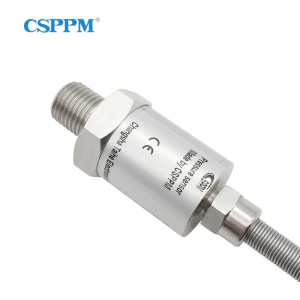
At CSPPM Sensor, we specialize in developing precision pressure sensing solutions tailored for demanding industrial applications. Our sensors, such as the PPM-T6103A LNG Special Pressure Transmitter, are engineered with advanced materials and manufacturing techniques to deliver long-term stability, high reliability, and excellent performance in harsh environments.
Application Scenarios Analysis
Choosing the right pressure sensor depends largely on the specific application environment. A steam pressure transducer is designed to withstand high temperatures and corrosive steam environments, making it ideal for power plants, boilers, and steam pipelines. In contrast, an industrial pressure sensor is versatile for general manufacturing, chemical processing, and hydraulics, where diverse pressure ranges and media are present. The hammer union pressure sensor is typically used in oilfield and drilling operations, where connections must endure high mechanical shocks and vibrations.
Performance, Reliability, Cost, and Maintenance Comparison
When comparing these sensors, performance and reliability are paramount. The steam pressure transducer often incorporates stainless steel diaphragms and ion-sputtered thin-film chip sensor elements, like those in the PPM-T6103A, to resist thermal shock and corrosion, ensuring long-term accuracy. Industrial pressure sensor vary widely but generally balance cost-effectiveness with durability, employing materials suited for less extreme environments. Hammer union sensors prioritize mechanical robustness to survive harsh physical conditions but may require more frequent maintenance due to exposure to debris and shock. Cost-wise, steam pressure transducers tend to be more expensive due to specialized materials and construction, while industrial sensors offer a broader price range. Maintenance needs correlate with environment severity; steam and hammer union sensors demand periodic inspection, whereas many industrial sensors can operate with minimal upkeep.
Selection Process and Considerations
Selecting the appropriate sensor starts with evaluating the operating temperature, pressure range, and medium compatibility. For steam systems, the steam pressure transducer must feature corrosion-resistant materials and a sealed design to prevent leaks and contamination. Industrial processes require an industrial pressure sensor that matches the specific pressure range and media, considering factors such as accuracy and response time. For oilfield applications involving hammer unions, mechanical durability and shock resistance are critical. Additional considerations include installation requirements, output signals, and calibration capabilities. Understanding these parameters ensures the chosen sensor will perform reliably over its intended lifespan.
Conclusion
Selecting the right pressure sensor—whether a steam pressure transducer, industrial pressure sensor, or hammer union sensor—requires careful analysis of application conditions, performance demands, and maintenance capabilities. At CSPPM Sensor, our expertise in developing robust and precise pressure measuring devices, exemplified by the PPM-T6103A LNG Special Pressure Transmitter, allows us to provide solutions that meet stringent industrial needs. Our products are designed for stability, reliability, and longevity, ensuring optimal performance in even the most challenging environments.
No. 188, Huanbao Road, Yuhua Zone, Changsha, Hunan, China
+86-731-82561520
info@csppm.com
Subscribe to our newsletter for discounts and more.


 English