info@csppm.com
CSPPM-18+ years of focus on R&D and manufacturing of pressure、level and weight sensor
2026-03-27
As we continue advancing sensing solutions for demanding industrial environments, CSPPM Sensor focuses on developing technologies that support the rapid growth of new energy applications. In this field, the ability to capture accurate pressure values under harsh conditions is essential. Our work with the high temperature sensor new energy market reflects our commitment to long-term reliability and stable performance across challenging thermal cycles. By integrating materials science with precise pressure-measurement techniques, we strengthen the foundation for safer and more efficient energy system development.
High-Temperature Sensing Requirements in Emerging Energy Applications
In many emerging energy scenarios, accurate pressure feedback is necessary for system control and equipment protection. As we design solutions for these conditions, the high temperature pressure sensor becomes an important tool for maintaining operational stability during high loads, fluctuating temperatures, and continuous production cycles. For example, thermal energy storage systems, hydrogen-related processes, and geothermal equipment frequently operate above conventional temperature limits. These projects require sensing components capable of maintaining consistent electrical output and mechanical durability. Our team continues to work closely with engineers in the high temperature sensor new energy sector to support applications involving complex pressure levels, corrosive media, and confined installation spaces.
Design Concepts That Strengthen Long-Term Performance
To meet the structural and temperature demands of new energy equipment, we invest in sensor designs that emphasize precision, fatigue resistance, and environmental adaptability. Many customers selecting a high temperature pressure sensor need stable output during long-term thermal cycling as well as flexible integration options. For this reason, we adopt ion-sputtered thin-film elements, stainless-steel housings, and sealed welding processes to maintain mechanical consistency. These design choices also support high repeatability and a more predictable drift profile when equipment is exposed to rapid heating or cooling. Through continuous material evaluation and engineering verification, our company ensures that our solutions remain compatible with evolving system architectures in the high temperature sensor new energy landscape.
Conclusion: Supporting Safer and More Efficient New Energy Development
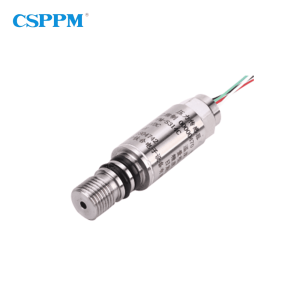
Looking ahead, we believe that the continued expansion of the high temperature pressure sensor market will directly influence the reliability of advanced energy systems. By aligning our research direction with real industrial requirements, we will keep providing durable sensing solutions for thermal energy, hydrogen equipment, geothermal facilities, and other developing fields within the high temperature sensor new energy segment. One example is our PPM-S312A 150℃ Oil Well High Temperature Pressure Sensor, designed with an ion-sputtered thin-film chip, stainless-steel structure, and laser-welded sealing. It operates at −40°C to +150°C, offers 1.8mV/V–5mV/V output, features an M10×1 interface with dual O-ring sealing, and delivers 0.1%FS or 0.25%FS accuracy. This compact and customizable design reflects our ongoing goal of supporting customers who work in high-temperature and high-load environments. As we continue improving sensing performance, we remain committed to enabling safer, more stable, and more efficient new energy systems.
No. 188, Huanbao Road, Yuhua Zone, Changsha, Hunan, China
+86-731-82561520
info@csppm.com
Subscribe to our newsletter for discounts and more.


 English