info@csppm.com
CSPPM-18+ years of focus on R&D and manufacturing of pressure、level and weight sensor
2025-10-14
A hammer union is a type of pipe fitting commonly used in the oil and gas industry for quick and secure connections. It consists of a male and female component that lock together with a sharp tap from a hammer, providing a tight seal without the need for threaded bolts or flanges. Wing unions, a subtype of hammer unions, have wing-shaped lugs to facilitate easy assembly and disassembly, especially in confined spaces or where frequent connection changes are necessary. Compared to traditional threaded unions or flange unions, hammer unions offer faster installation and removal times. Threaded unions rely on screw threads which can wear or seize under heavy use, while flange unions require multiple bolts, making them heavier and more time-consuming to handle. Hammer unions, by contrast, provide a robust, leak-proof connection with minimal tools, making them ideal for high-pressure environments.
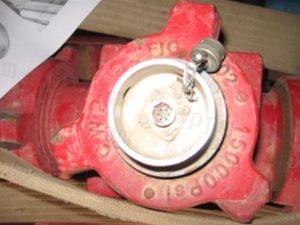
Comparison with Threaded and Flange Unions
Threaded unions are generally simpler in design but are prone to thread damage and corrosion, which can compromise sealing integrity. Flange unions provide strong, reliable connections but can be bulky and require significant time for bolt tightening and alignment. Hammer unions strike a balance by offering a compact design that can withstand high pressures while allowing rapid connection and disconnection.
In addition, hammer unions excel in scenarios where maintenance speed and operational efficiency are critical. Their design reduces downtime during pipe changes or system inspections, which is essential in high-demand industrial settings.
Typical Applications of Hammer Union Pressure Sensors
Hammer union pressure sensor are widely used in oil and gas drilling, petrochemical plants, and other heavy industries requiring reliable pressure monitoring under harsh conditions. These sensors are often integrated with hammer unions to measure pressure in pipelines, wellheads, and hydraulic systems.
The hammer union pressure transmitter is especially valuable in offshore and onshore drilling rigs, where exposure to corrosive fluids, abrasive materials, and extreme temperatures is common. The robust design of these sensors ensures accurate, real-time pressure data crucial for operational safety and efficiency.
Key Features of Hammer Union Pressure Transmitters
A hammer union pressure transmitter, such as the PPM-T293E “1502″ anti-corrosion type model, is engineered for the most demanding environments. Its all-welded stainless steel construction uses specialized anti-corrosion materials to protect sensitive internal electronics from corrosive drilling media and abrasive particles.
This transmitter maintains structural integrity and consistent performance at elevated temperatures, making it suitable for long-term deployment in challenging field conditions. The combination of durability, corrosion resistance, and precise measurement capabilities positions hammer union pressure transmitter as essential components in modern industrial pressure monitoring systems.
Conclusion
The hammer union pressure sensor and hammer union pressure transmitter represent critical advancements in pressure measurement technology for industries where reliability and durability are paramount. By combining the practical design of hammer unions with robust sensor technology, these devices facilitate efficient, safe, and accurate monitoring of high-pressure systems.
CSPPM Sensor specializes in the development and manufacturing of high-quality hammer union pressure sensors and transmitters like the PPM-T293E “1502″ model. Designed specifically for harsh oil and gas environments, CSPPM Sensor products ensure dependable performance, corrosion resistance, and longevity for demanding applications worldwide.
No. 188, Huanbao Road, Yuhua Zone, Changsha, Hunan, China
+86-731-82561520
info@csppm.com
Subscribe to our newsletter for discounts and more.


 English