info@csppm.com
CSPPM-18+ years of focus on R&D and manufacturing of pressure、level and weight sensor
2025-09-04
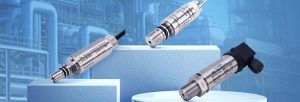
Across oil fields, reliability is not just a feature—it is an absolute requirement. Equipment must perform under extreme pressure, vibration, and environmental stress. This is where the specialized design of a hammer union pressure sensor becomes critical. At CSPPM Sensor, we engineer tools like our Model PPM-T293F 1502 hammer union pressure sensor to meet these brutal demands. But how does this specific type of instrument actually work? Its function is a blend of robust mechanical integration and precise electronic measurement.
The Role of the Hammer Union Connection
The defining feature of this device is its connection method. A hammer union is a type of fitting known for its exceptional mechanical strength and ability to contain very high pressures. It utilizes a threaded collar that is manually tightened with a hammer and spud wrench, creating a secure, leak-proof seal. This is the first and most vital step in the sensor’s function: a fail-safe mechanical interface. For our PPM-T293F 1502 hammer union pressure sensor, this fitting allows it to be directly and securely installed into high-pressure fluid lines on drilling rigs and service equipment, ensuring the process media is safely contained before any measurement begins.
From Physical Force to Electrical Signal
Once securely installed, the core function of measurement begins. The internal pressure of the system is transferred through the hammer union fitting to a sensing element inside the transducer. This element, typically a advanced diaphragm, deflects minutely in response to the applied pressure. This physical deflection is then converted into an electrical change. In a strain-gauge based sensor, this deflection alters the electrical resistance of the gauges, which are arranged in a Wheatstone bridge circuit. This change in resistance produces a small electrical signal that is directly proportional to the pressure being applied.
Output and Integration for Operational Use
The raw electrical signal from the sensing element is weak and not suitable for transmission across the noisy environments of an oil field. Therefore, the transducer contains integrated signal conditioning circuitry. This onboard electronics amplifies the signal and converts it into a robust, standardized output. Our 1502 hammer union pressure sensor provides options like a 4-20mA current loop or a 0-10VDC voltage output. These signals are resilient to electrical interference and can be transmitted over long distances to control systems, data loggers, or readout displays. This provides operators with accurate, real-time pressure data that is essential for monitoring wellhead integrity, controlling pumping equipment, and ensuring overall safety.
The function of a hammer union pressure sensor is a seamless integration of mechanical fortitude and electronic precision. It is not merely a measuring device; it is a critical component built for the severe conditions of field applications. From its secure hammer union install to its reliable electrical output, every aspect of its design, like that of the CSPPM Sensor PPM-T293F, serves a singular purpose: to deliver trustworthy performance where failure is not an option. This focus on functional reliability is what defines our approach to creating specialized measurement tools.
No. 188, Huanbao Road, Yuhua Zone, Changsha, Hunan, China
+86-731-82561520
info@csppm.com
Subscribe to our newsletter for discounts and more.


 English