info@csppm.com
CSPPM-18+ years of focus on R&D and manufacturing of pressure、level and weight sensor
2025-11-01
Clarifying the distinction between a pressure sensor and a pressure transmitter is a fundamental step in specifying the right component for an industrial application. While the terms are sometimes used interchangeably, they describe devices with different roles within a measurement and control loop. At CSPPM Sensor, we specialize in both technologies and recognize that a clear grasp of the pressure transmitter vs sensor dynamic is crucial for system efficiency and data integrity. This article will detail the core differences and outline the specific applications where each component excels.
Core Functions: From Sensing to Communicating
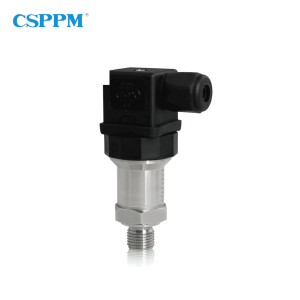
A pressure sensor is the essential core element that directly interacts with the physical environment. It is an electronic device designed to convert applied physical pressure into a basic electrical signal. This raw signal, however, is often weak and not standardized, making it susceptible to interference over long distances. This is where the role of a pressure transmitter becomes critical. A pressure transmitter incorporates a pressure sensor but adds integrated signal conditioning and amplification circuitry. It takes the sensor’s raw signal, processes it, and converts it into a robust, standardized output, such as 4-20 mA or a digital protocol like HART or Modbus, that can be transmitted over long distances to controllers and monitoring systems.
Application Contexts: Where Each Device Operates
The choice between a standalone pressure sensor and a full pressure transmitter is dictated by the application’s requirements. Sensors are typically employed in localized, short-distance scenarios where the control unit is nearby, such as within an embedded system or a compact piece of machinery. In contrast, a pressure transmitter is the preferred solution for comprehensive process monitoring and control in expansive industrial settings like oil and gas pipelines or power generation facilities. For instance, our high-temperature and explosion-proof sensor elements are often integrated into custom pressure transmitter housings to create a solution that can withstand harsh plant environments while providing reliable, long-distance data communication.
The Advantage of Integrated Solutions and Customization
The primary advantage of a pressure transmitter is its ability to deliver a ready-to-use, noise-resistant signal that is compatible with standard industrial control systems. This integration simplifies system design, reduces external components, and enhances overall measurement reliability. At CSPPM Sensor, we leverage our deep expertise in sensor technology to offer customized pressure transmitter solutions. Whether you need a device for monitoring air pressure in a pneumatic system or a liquid level sensor for a tank farm, we can tailor the performance and mechanical specifications to your exact needs, ensuring the final product delivers optimal operational efficiency and safety.
Selecting the correct device—a basic sensor or a fully integrated pressure transmitter—directly impacts the performance and cost-effectiveness of your operation. Understanding the functional relationship in the pressure transmitter vs sensor comparison allows for more informed procurement and design decisions. Our team at CSPPM Sensor is ready to provide the precise components your systems require.
No. 188, Huanbao Road, Yuhua Zone, Changsha, Hunan, China
+86-731-82561520
info@csppm.com
Subscribe to our newsletter for discounts and more.


 English