info@csppm.com
CSPPM-18+ years of focus on R&D and manufacturing of pressure、level and weight sensor
2025-10-16
Pressure sensors are critical components in many industrial and environmental monitoring systems. However, their performance can be significantly affected by humidity and condensation, which introduce moisture-related challenges. This article explores the impact of humidity and condensation on pressure sensors, outlines moisture-proof and waterproof design strategies, and discusses reliability concerns in temperature and humidity cycling environments. Finally, practical application scenarios and case studies demonstrate how these strategies improve sensor performance.
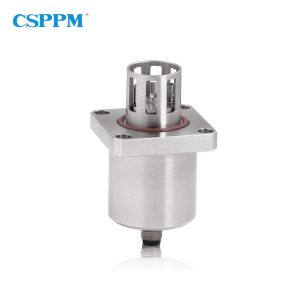
Impact of Humidity and Condensation on Pressure Sensors
Humidity and condensation can cause several issues in pressure transducer, including corrosion, signal drift, and electrical short circuits. Moisture can penetrate sensor housings, leading to degradation of internal components, such as strain gauges and electronic circuits. Condensation may form on sensitive surfaces during rapid temperature changes, causing temporary or permanent damage. These factors reduce accuracy, reliability, and lifespan of pressure transducers if not properly addressed.
Moisture-Proof and Waterproof Design Strategies
Effective moisture-proof and waterproof design is essential to ensure the longevity and stable operation of pressure transducers in humid or water vapor-rich environments. Key strategies include:
Material Selection: Using corrosion-resistant materials such as stainless steel for sensor housings protects against moisture-induced corrosion.
Sealing Techniques: Employing high-quality seals, gaskets, and potting compounds prevents water ingress into sensitive areas.
Protective Coatings: Applying hydrophobic or conformal coatings on electronic components helps repel moisture.
Ventilation Membranes: Incorporating breathable membranes allows pressure equalization while blocking liquid water.
Sensors designed with these features can be classified as waterproof pressure transducer, suitable for harsh environments involving water exposure or high humidity.
Reliability and Aging Design in Temperature and Humidity Cycling Environments
Pressure transducers often experience repeated cycles of temperature and humidity changes, which accelerate aging and reduce reliability. Designing for these conditions involves:
Selecting materials with matching thermal expansion coefficients to minimize mechanical stress.
Utilizing robust electronic components rated for wide temperature and humidity ranges.
Implementing accelerated aging tests during development to predict long-term performance.
Designing sensor packaging that maintains integrity despite thermal cycling and moisture exposure.
Such comprehensive design approaches ensure pressure transducers maintain accuracy and functionality over extended service periods.
Application Scenarios and Case Studies
Waterproof pressure transducers find applications in diverse fields, including industrial process control, HVAC systems, automotive air and fuel monitoring, and environmental sensing. For example, in oil viscosity and density monitoring, sensors must operate reliably despite exposure to moisture and temperature fluctuations. The PPM-HLV-3 oil viscosity and density sensor, featuring stainless steel construction and real-time data updating under one second, exemplifies robust sensor design that withstands corrosion and vibration in demanding environments. Its compact size and long service life facilitate seamless integration into complex monitoring systems.
Conclusion
Moisture-proof and waterproof strategies are fundamental to ensuring the durability and precision of pressure transducers operating in humid and water vapor environments. By addressing the impacts of humidity and condensation through careful material selection, sealing, protective coatings, and reliability-focused design, manufacturers can deliver sensors that perform reliably over time. CSPPM Sensor leverages these principles in its product line, including solutions like the PPM-HLV-3 sensor, to provide high-accuracy, corrosion-resistant, and vibration-resistant pressure transducers designed for challenging conditions. This commitment to quality supports long-term operational stability and integration ease across various industrial applications.
No. 188, Huanbao Road, Yuhua Zone, Changsha, Hunan, China
+86-731-82561520
info@csppm.com
Subscribe to our newsletter for discounts and more.


 English