info@csppm.com
CSPPM-18+ years of focus on R&D and manufacturing of pressure、level and weight sensor
2026-03-26
As CSPPM Sensor continues to support diverse industrial sectors, we focus on delivering reliable solutions built around the needs of modern fluid operations. In our daily work, we integrate the liquid pressure transducer into multiple monitoring setups to help stabilize system flow and ensure consistent measurement. By optimizing sensing response, we allow equipment operators to better observe liquid behavior across pipelines and processing units. Our approach centers on practical performance rather than exaggerated claims, and we aim to reflect real-world industrial challenges with balanced and accurate information. The liquid pressure transducer plays a role in enhancing process visibility, especially when changes in flow rate, temperature, or medium properties require dependable feedback signals.
Applied Advantages in Industrial Environments
In many operations, fluid systems must perform steadily under shifting mechanical stress, variations in medium density, or exposure to corrosive liquids. When we integrate a liquid pressure transducer into these conditions, we focus on matching sensing range, housing materials, and output format to the application requirements. Our engineering team evaluates installation positions, sealing interfaces, and temperature profiles to ensure dependable long-term use. By doing so, we help production teams gather clearer data and maintain more stable process control. The presence of a liquid pressure transducer within a system assists in early detection of abnormal pressure trends, allowing maintenance personnel to schedule interventions more efficiently and avoid unnecessary shutdowns.
Product Insight: PPM-T276A “2002” Ultra-High Pressure Solution
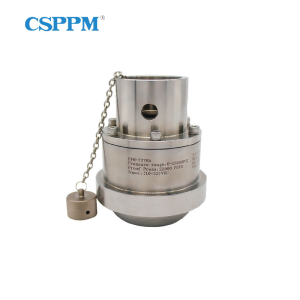
Among our available options, the PPM-T276A “2002” Ultra-high Pressure Hammer Union Pressure Transmitter serves operations that demand durable construction and clear signal output under extreme pressure. This model offers a measuring range of 0–15000 psi, 20000 psi, and 25000 psi, providing flexibility across drilling and well-service equipment. Supported output formats include 4–20mA, 0–5VDC, 1–5VDC, 0–10VDC, and 2mV/V, giving operators freedom to integrate the device into existing data-acquisition platforms. Its operating temperature of –40 to 80°C supports continuous field use, while the 0.5%FS accuracy maintains consistent readings. The unit’s welded stainless-steel housing incorporates anti-corrosion materials designed to isolate abrasive drilling media and preserve internal electronics. These characteristics align the product with the demanding conditions encountered in both on-shore and off-shore environments.
Conclusion: Ensuring Stability in Liquid Pressure Control
In our experience, stable liquid-pressure measurement remains essential for managing complex fluid networks. By applying a liquid pressure transducer that matches the environmental and operational requirements, we help users maintain greater consistency in flow regulation, system protection, and operational planning. Our company continues to refine sensing options that support harsh industrial conditions without over-promising performance or providing unverifiable information. The PPM-T276A “2002” model demonstrates how durable materials and well-designed output configurations contribute to more dependable monitoring. We remain committed to offering practical sensing solutions that help operators maintain safer and more predictable fluid-system performance.
No. 188, Huanbao Road, Yuhua Zone, Changsha, Hunan, China
+86-731-82561520
info@csppm.com
Subscribe to our newsletter for discounts and more.


 English