info@csppm.com
CSPPM-18+ years of focus on R&D and manufacturing of pressure、level and weight sensor
2025-10-11
Accurate pressure measurement in steam systems is critical for process control, safety, and efficiency. However, the unique conditions within steam environments — including high temperatures, pressure fluctuations, and corrosive elements — present significant challenges that standard pressure transmitters often cannot withstand. This article explores the impact of these factors on sensor performance and outlines essential strategies for selecting steam-specific transmitters, with a focus on the role of steam pressure transducer and high temperature pressure transducers.
Impact of Steam Temperature on Sensor Performance
Steam systems typically operate at elevated temperatures, often exceeding 150°C, which can degrade the components of ordinary transmitters. Standard pressure sensors may experience drift, reduced sensitivity, or failure due to thermal expansion, material fatigue, and electronic instability. A high temperature pressure transducer designed specifically for steam applications must maintain accuracy and reliability under these harsh thermal conditions. Advanced materials and manufacturing technologies, such as ion sputtering thin film chips and robust stainless steel housings, are essential to ensure sensor durability and stable output.
Pressure Fluctuations and Their Effects on Measurement Accuracy
Steam pressure can fluctuate rapidly due to changes in load, valve operations, or system disturbances. These fluctuations impose mechanical stress on the sensor diaphragm and can lead to fatigue over time. Ordinary transmitters may not be designed to handle such dynamic pressure environments, resulting in shortened sensor life and inaccurate readings. A steam pressure transducer tailored for these conditions incorporates pressure fatigue-resistant designs and laser-welded seals to maintain structural integrity and consistent performance under variable pressure loads.
The Effects of Scaling and Corrosion on the Durability of Sensors
Mineral deposits and chemical reactions inside the steam and condensate can lead to scaling and corrosion in steam systems. Measurement accuracy and sensor longevity can be compromised when these occurrences foul or destroy sensor parts. To keep corrosive chemicals out of a steam pressure transducer, it has to be sealed well and made of corrosion-resistant materials like stainless steel. Protective coatings and customizable sensor shapes further increase resistance to scale and corrosion, guaranteeing operational dependability over the long term.
Conclusion
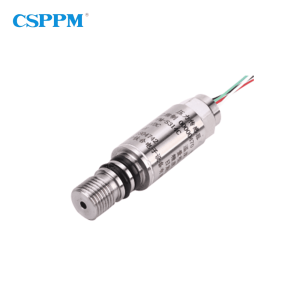
The complex environment of steam systems demands pressure measurement solutions that go beyond ordinary transmitters. Steam pressure transducers that integrate high temperature resistance, mechanical robustness, and corrosion protection are essential for accurate and reliable performance. The CSPPM Sensor PPM-S312A series exemplifies these qualities, featuring ion sputtering thin film technology, stainless steel construction, and laser welding to provide a high temperature pressure transducer capable of enduring the rigors of steam applications. For industries relying on precise steam pressure data, selecting a dedicated steam pressure transducer like those from CSPPM Sensor is crucial to maintaining system integrity and operational efficiency.
No. 188, Huanbao Road, Yuhua Zone, Changsha, Hunan, China
+86-731-82561520
info@csppm.com
Subscribe to our newsletter for discounts and more.


 English