info@csppm.com
CSPPM-18+ years of focus on R&D and manufacturing of pressure、level and weight sensor
2026-03-24
As we expand our involvement in the renewable-energy market, we continue improving how CSPPM Sensor solutions support the stable operation of wind, solar, and energy-storage facilities. Our work with new energy sensors allows us to interpret environmental changes, shifting mechanical loads, and temperature variations that influence equipment performance on a daily basis. By assigning each pressure sensor to hydraulic, pneumatic, or coolant environments where consistent feedback is required, we help operators maintain balanced system behavior. These measurements also support the refinement of maintenance planning as renewable assets operate through changing seasons and long duty cycles.
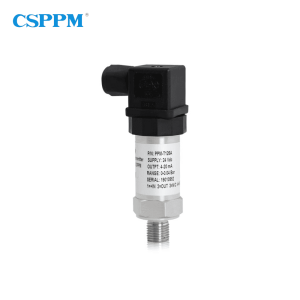
Pressure Monitoring in Wind-Power Applications
Wind-power equipment operates under rotating forces, rapid environmental changes, and complex hydraulic behavior, creating a natural need for dependable monitoring capabilities. Through our experience in turbine support, we configure new energy sensors to observe pitch-control hydraulics, lubrication pressure, and brake-system balance. When a dedicated pressure sensor identifies irregular flow or early-stage imbalance, maintenance teams can act before performance begins to decline. Our company applies this same monitoring approach across tower equipment and auxiliary hydraulic assemblies where even minor variations may influence long-term turbine reliability. These integrated measurement strategies strengthen operational consistency throughout varying wind conditions.
Applying Sensor Technology to Solar and Storage
Solar and storage facilities experience temperature shifts, irradiance fluctuations, and evolving load demands, all of which benefit from detailed system feedback. In photovoltaic installations, we configure new energy sensors to track coolant-loop performance, pump operation, and inverter-related thermal behavior. A precisely placed pressure sensor helps operators maintain coolant stability as modules heat and cool during routine operation. In battery-energy-storage systems, pressure changes can indicate enclosure stress, thermal expansion, or air-exchange imbalance inside the protective casing. Our approach ensures that operators have the information they need to maintain stable thermal conditions while protecting sensitive internal components from unexpected shifts in pressure.
Conclusion: Reliable Tools for Evolving Renewable Needs
Our mission is to provide practical measurement solutions that reinforce stability and promote predictable operation across wind, solar, and storage environments. By installing each pressure sensor according to system characteristics and environmental requirements, we strengthen long-term dependability and support informed maintenance decisions. Within our portfolio, the PPM-T126A Low Cost Industrial Pressure Transmitter offers flexibility for renewable-energy projects, featuring optional 0.2%FS or 0.5%FS accuracy levels, a measurement range of 0–1 kPa to 60 MPa, and multiple signal-output configurations suitable for varied equipment designs. This model allows us to address different monitoring needs as renewable systems continue to evolve with modern application demands.
No. 188, Huanbao Road, Yuhua Zone, Changsha, Hunan, China
+86-731-82561520
info@csppm.com
Subscribe to our newsletter for discounts and more.


 English